Reading a nutrition label is essential for making informed decisions about your diet and health. Whether you’re trying to manage weight, control a medical condition (like diabetes or hypertension), or just eat more healthfully, understanding the information on a nutrition label helps you compare foods and select the best option for your needs.
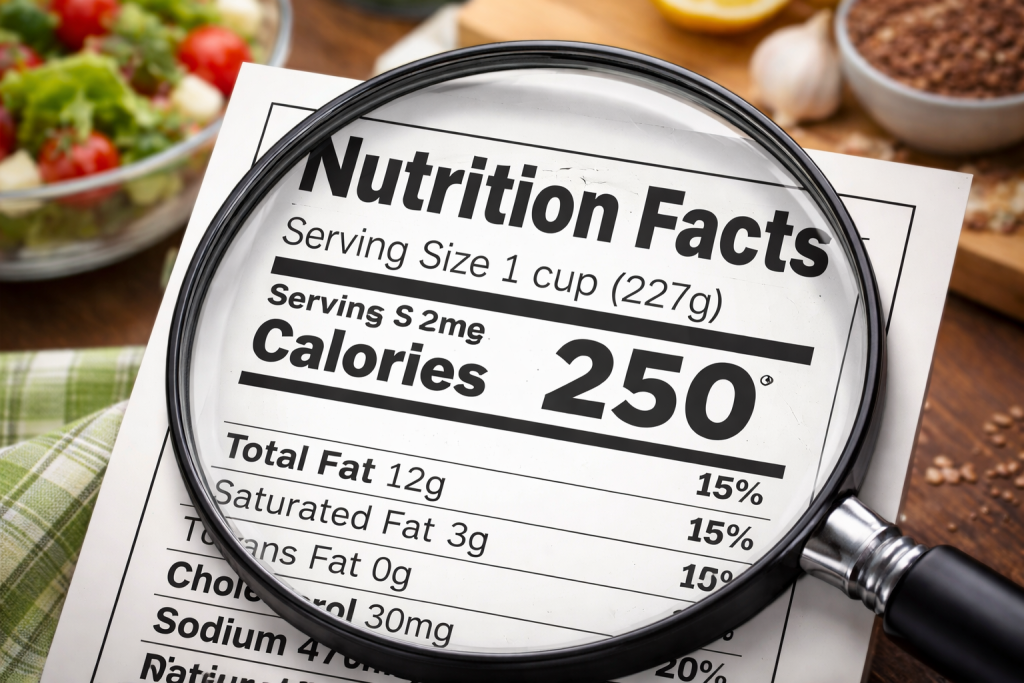
1. Anatomy of a Nutrition Label
A typical nutrition label includes the following sections:
| Section | Purpose |
| Serving Size | Basis for all nutritional values listed |
| Calories | Energy provided per serving |
| Macronutrients | Fats, Carbohydrates, and Proteins |
| Micronutrients | Vitamins and Minerals |
| % Daily Value (%DV) | How much a nutrient in one serving contributes to a daily diet |
| Ingredient List | All components used in descending order by weight |
| Allergy Information | Highlights common allergens like nuts, dairy, gluten |
2. Step-by-Step Breakdown of the Nutrition Label
A. Start with the Serving Size
- Location: Top of the label.
- Why It Matters: All nutrient amounts listed are based on this serving size.
- Look For:
- Serving Size in common units (e.g., 1 cup, 3 crackers)
- Grams or milliliters (g/mL) for accuracy.
- Servings per container — be careful with multi-serving packages.
Example: If one serving is 150g and you eat 300g, you must double all listed values.
B. Check the Calories
- Calories: Indicate how much energy you get from one serving.
- Use: Useful for managing energy intake based on activity level and goals.
- Tip:
- Low calorie: — 40 kcal per serving
- Moderate: ~100 kcal
- High: — 400 kcal
Watch for: —Low-fat— or —fat-free— doesn’t always mean —low-calorie.— Some products add sugar to compensate.
C. Review the Macronutrients
1. Total Fat
- Includes:
- Saturated Fat — Aim for less (raises LDL cholesterol)
- Trans Fat — Avoid (increases heart disease risk)
- % Daily Value:
- Based on 20g saturated fat per day (on 2,000 kcal diet)
Tip: Choose products with — 5% DV saturated fat and 0g trans fat.
2. Cholesterol
- Linked to heart disease at high levels.
- Aim: Less than 300 mg/day.
3. Sodium
- Too much = high blood pressure
- Aim: — 2,300 mg/day
- %DV:
- — 5% = Low
- — 20% = High
Hidden Source: Sodium is high in canned soups, sauces, and frozen meals.
4. Total Carbohydrates
- Includes:
- Dietary Fiber — Good for digestion, lowers cholesterol.
- Total Sugars — Includes:
- Natural sugars (fruit, dairy)
- Added Sugars (listed separately)
Tip:
- High fiber = — 5g per serving
- Low added sugar = — 5g per serving
5. Protein
- Essential for muscle repair, immune function, and satiety.
- Check if the product provides complete protein (all 9 essential amino acids).
Examples of complete proteins: Eggs, dairy, meat, soy, quinoa.
D. Look at the Micronutrients
These are listed with their %DV:
| Nutrient | Function | Daily Value (DV) |
| Vitamin D | Bone health, immune system | 20 mcg |
| Calcium | Bones, teeth, muscle function | 1,300 mg |
| Iron | Oxygen transport in blood | 18 mg |
| Potassium | Heart and muscle function | 4,700 mg |
Aim for:
- High %DV of good nutrients like Fiber, Vitamin D, Calcium, Iron, Potassium.
- Low %DV of risk nutrients like Sodium, Saturated Fat, Added Sugars.
3. Understanding % Daily Value (%DV)
- Based on a 2,000-calorie daily diet (average adult).
- Helps gauge whether a food is —high— or —low— in a nutrient:
- 5% DV or less = Low
- 10-19% DV = Moderate
- 20% DV or more = High
Rule of Thumb:
- Use %DV to balance daily intake across all meals.
4. Ingredient List Decoded
- Listed by weight (most to least).
- Watch out for:
- Added sugars in different forms: glucose, fructose, maltose, corn syrup, etc.
- Refined grains: look for whole grain first.
- Artificial additives: colorings, preservatives, flavor enhancers.
- The first ingredient is whole, recognizable food (e.g., whole oats, lentils).
- The list is short and understandable.
5. Allergy and Intolerance Information
Look for bolded or separate statements such as:
“Contains: Milk, Soy, Wheat”
Also helpful for:
- Gluten-sensitive individuals
- Vegan/vegetarian diets
- Nut allergies
6. Label Claims: What Do They Mean?
| Claim | Meaning (FDA regulated in US) |
| Low Fat | ≤ 3g fat per serving |
| Sugar-Free | < 0.5g sugars per serving |
| High Fiber | ≥ 5g fiber per serving |
| Light (Lite) | 50% less fat or 1/3 fewer calories than standard version |
| Organic | ≥ 95% ingredients certified organic |
| Non-GMO | No genetically modified organisms (not necessarily organic) |
| Whole Grain | Contains whole grain ingredient (check % in ingredient list) |
7. Quick Tips for Smart Label Reading
- Don’t just look at calories — check where they come from (fat, sugar, etc.).
- Beware of serving sizes — you might eat more than one.
- Use %DV to compare products — great for choosing between brands.
- Avoid products high in trans fats and added sugars.
- Pick products high in fiber, protein, vitamins, and minerals.
8. Example: Nutrition Label Interpretation
Let’s say the label reads:
| Nutrient | Amount per Serving | % Daily Value |
| Calories | 200 | — |
| Total Fat | 8g | 10% |
| Saturated Fat | 1.5g | 8% |
| Trans Fat | 0g | — |
| Sodium | 470mg | 20% |
| Total Carbs | 30g | 11% |
| Dietary Fiber | 5g | 18% |
| Total Sugars | 6g | — |
| Added Sugars | 4g | 8% |
| Protein | 7g | — |
| Calcium | 130mg | 10% |
| Iron | 2mg | 10% |
Analysis:
- Moderate calories.
- High in sodium (20% DV).
- Good source of fiber and protein.
- Added sugars are present but moderate.
- Overall: A decent option for energy and satiety, but not ideal for sodium-restricted diets.
9. Tools & Apps for Nutrition Label Scanning
- Yuka
- MyFitnessPal
- Fooducate
- Cronometer
- ShopWell
These apps can scan labels and provide personalized health scores.
10. Conclusion
Reading a nutrition label is more than just scanning for calories—it’s about understanding how the nutrients impact your health and making informed decisions that align with your dietary goals. With practice, label reading becomes second nature and empowers better choices in a complex food environment.
Whether you’re trying to lose weight, manage blood sugar, reduce sodium, or just eat more whole foods — reading labels is your first step toward smarter eating.